The moment a second person is selling, two questions arrive.
Who did this, and who is allowed to. Erca answers both without you standing over anyone — and it answers the third one, whose lead it was, before anybody has to argue about it.
Nothing about the work. Everything about the record of it
The screens are the ones a solo agent uses. What a team adds is the need to know who did what, and to stop people seeing what is not theirs.
Whose lead was it
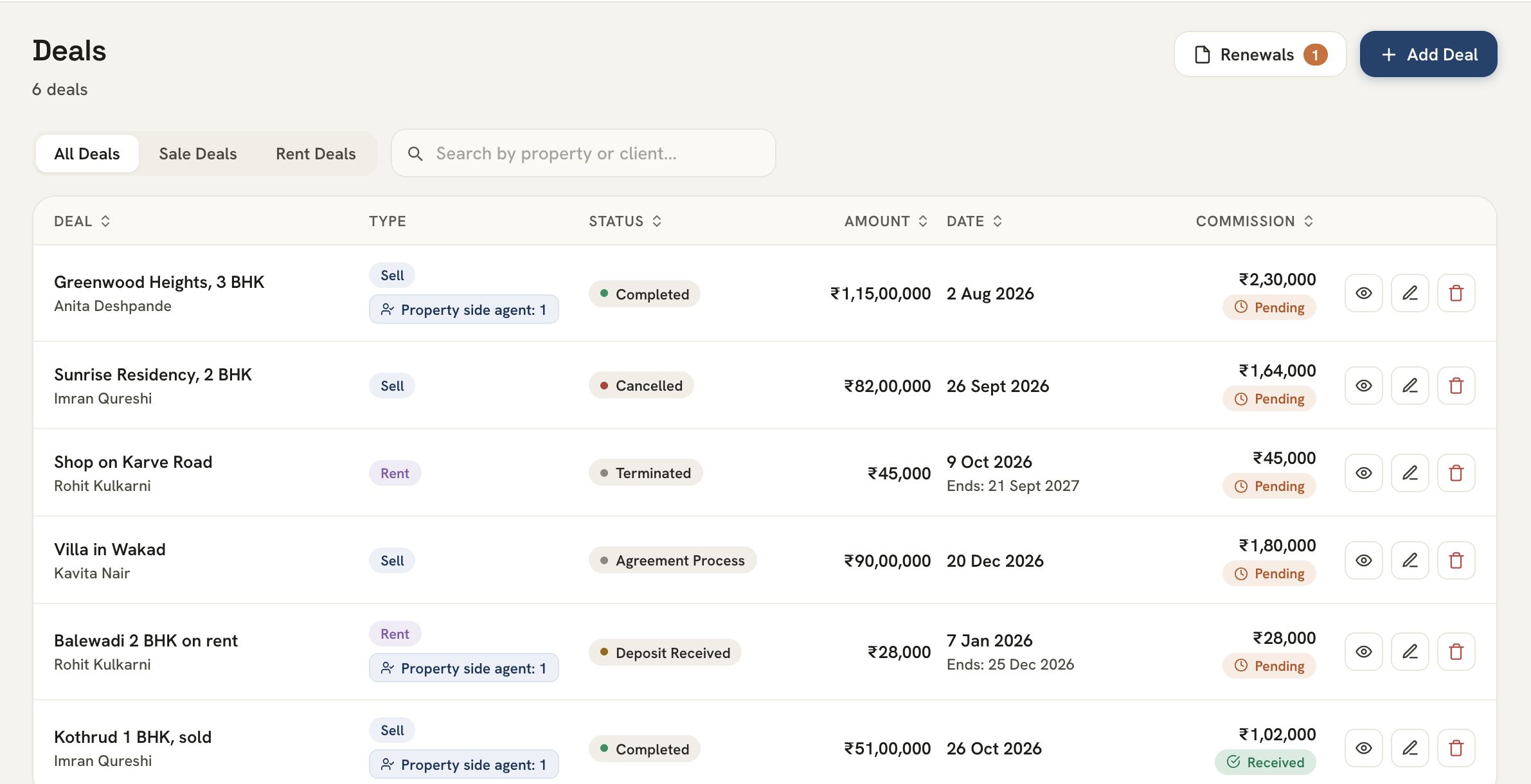
Recorded on the property and the client when they are created, not reconstructed from memory at payout.
- The chain of agents a listing came through
- Which agent introduced each client
- Who took the client on each visit
- An activity log of who changed what
What each share is
Worked out from your own rates, across the whole chain, including the agency’s own part.
- Separate rates for seller and buyer, owner and tenant
- Equal split across every referring agent plus the agency
- Renegotiate one share without touching your rates
- Part payments keep the agreed split
Who can see what
Per screen and per action, so a new joiner can do the job without walking out with your client list.
- Tick the screens each person gets
- View, add, edit, delete — chosen separately
- Client phone numbers can be withheld
- A screen they cannot open is not in their menu
Everyone signs in as themselves
Only what they need
Tick what each person can open, screen by screen, and separately whether they can add, change or remove anything on it.
- Per screen: properties, clients, visits, deals, projects, agents, expenses, reports and more
- Per action: view, add, edit, delete
- A junior can book visits without being able to see your clients’ phone numbers, email or address
- Deleting is off by default for somebody new — it is the one action with no undo
- A screen they cannot open is not in their menu at all, and the server refuses it too
Lead assignment
Switch it on and a new client goes to whoever in the rotation is carrying the fewest open ones. Switch it off and you hand them out yourself.
Activity log
Who added, changed or deleted what, and when — filtered by person, area or kind of change.
Team report
How each colleague is doing: visits, deals and calls, over any period.
Brokerage, split before anyone asks
The calculation an agency does on paper, late, under pressure, with two people remembering it differently — and the one that decides whether an agent brings you the next property.
The split, worked out
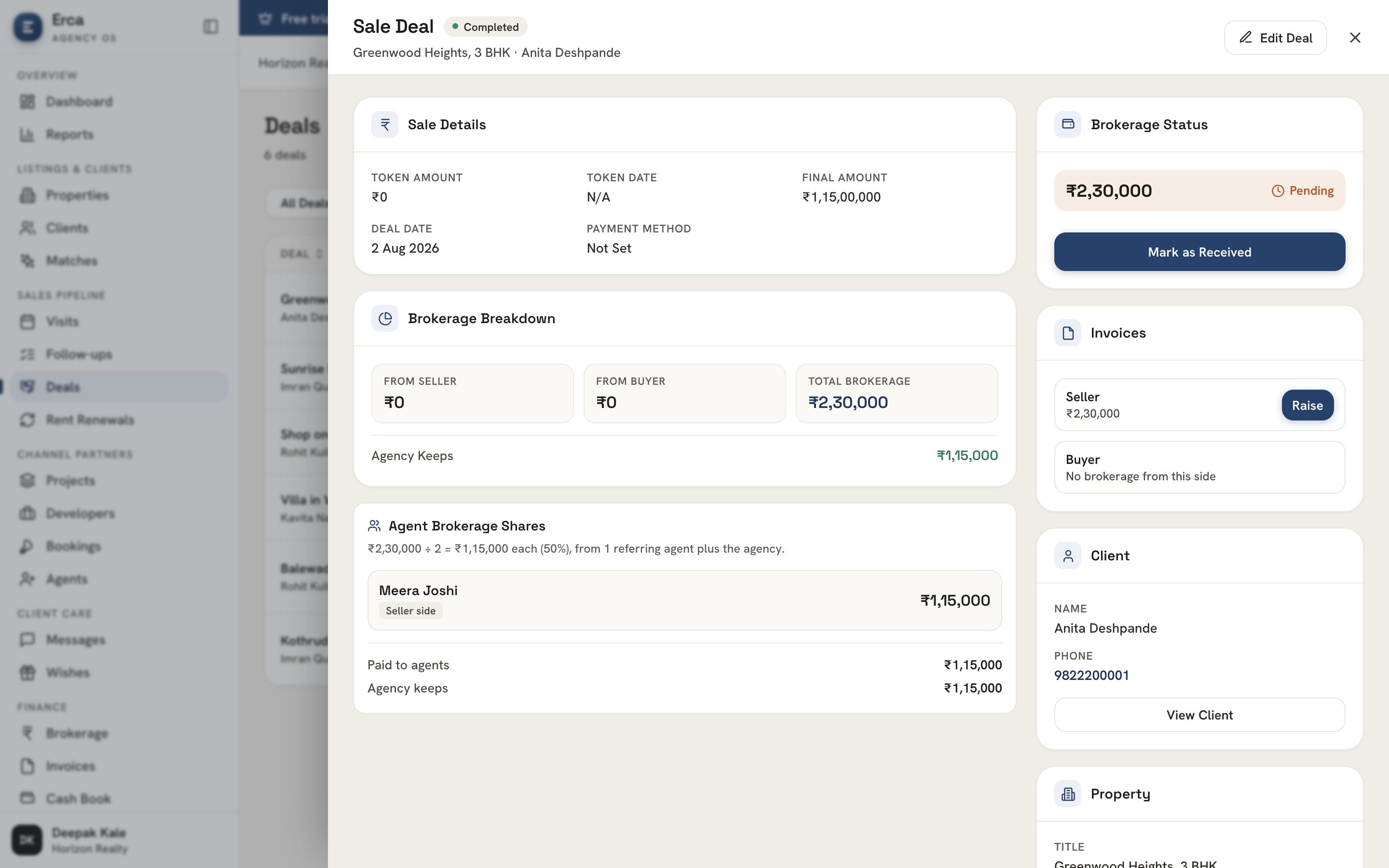
Brokerage comes from your standard rates for each side, unless you negotiated it — and the share for every co-broking agent comes out of it automatically.
- Separate rates for seller and buyer, owner and tenant
- Rent brokerage as months of rent, a percentage, or a flat fee
- An equal split across every referring agent plus the agency, in whole rupees
- Renegotiate one agent’s share on one deal without touching your rates
Partners’ split
Partners are team members with a share. Divide the month’s cash between them in proportion, and see the division before anyone is paid.
- Shares as percentages, edited one person at a time
- Divided pro rata on the shares actually set — never quietly scaled to 100
- Whole rupees; the remainder stays in the drawer
- Refuses to pay out more than the drawer holds
Per person, so it grows when you do
The add-ons are charged once for the whole agency rather than per seat, so a five-person office pays ₹100 for Follow-ups and not ₹500.
Add a colleague when you hire, and only then.
About two months free, on the add-ons as well as the base.
Once for the agency, not per user. ₹1,000 a year each if you pay yearly.
Moving an office over?
Tell us how many of you there are and what you mostly do — resale, rentals or developer projects — and we will set the agency up with you, with your own properties in it rather than a demo.
Put your own office on it for a month.
30 days, every add-on on, no card. Add your team, give them their screens, and see whether the next payout conversation is shorter.